


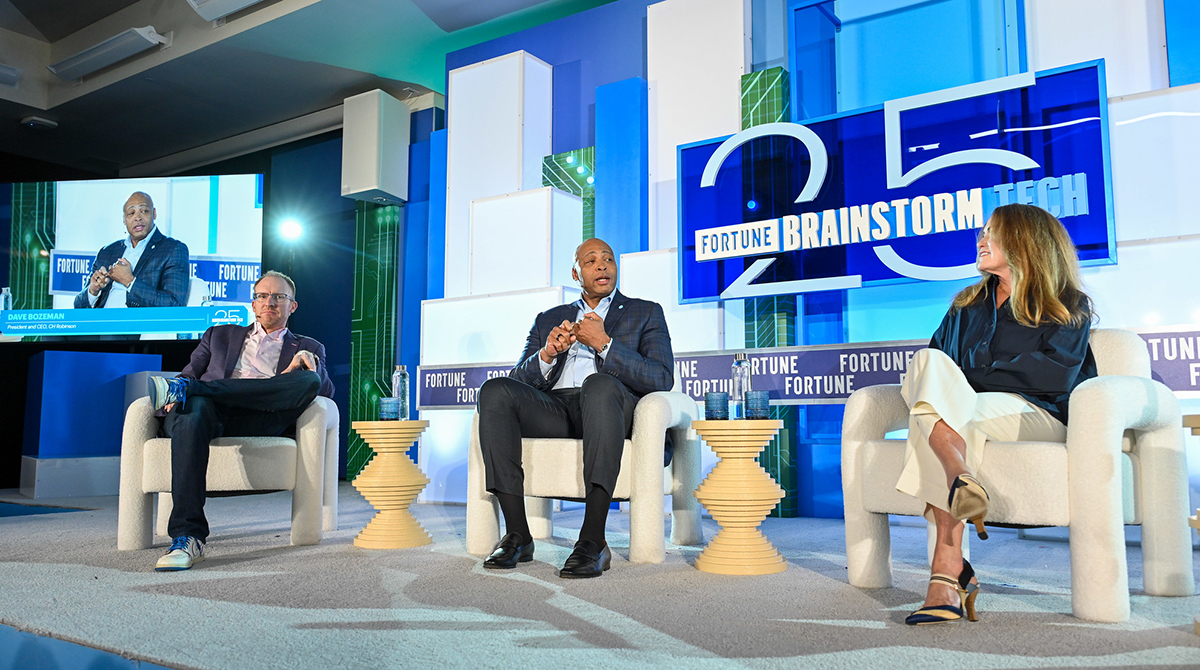
The brightest minds in technology and business convened in Aspen this week for Fortune Brainstorm Tech, one of the most influential gatherings of Fortune 500 leaders, innovators, investors, and media. C.H. Robinson senior executives took the stage, leading conversations alongside other top technology innovators from companies including Amazon, Anthropic, Google Cloud, NVIDIA, and Salesforce as they explored the breakthroughs shaping the future of business and innovation.
Artificial intelligence was a throughline at this year’s gathering, with conversations centered around three key themes:
- The rapid advancement of next-generation AI models
- The challenge of deploying AI at enterprise scale
- The growing need for trust, governance, and real-world impact
Speakers highlighted that experimentation remains fundamental to AI, but industry leaders are now advancing beyond it, embedding AI into real-world operations. C.H. Robinson President and Chief Executive Officer, Dave Bozeman, and Chief Technology Officer, Mike Neill, shared their experience leading AI transformation at scale to drive measurable business outcomes. Beyond boosting productivity, the C.H. Robinson Lean AI approach improves decision quality, drives revenue growth, elevates customer experience, and supercharges employees across the business.
How Lean AI is transforming a Fortune 500 company
One of the defining questions hanging over this year’s AI conversation was how companies move from experimentation to execution—especially in industries that are physical, fast-moving, and operationally complex. For business leaders, the challenge isn’t access to AI; it’s building new systems that can perform reliably in real-world operating environments created before the proliferation of AI.
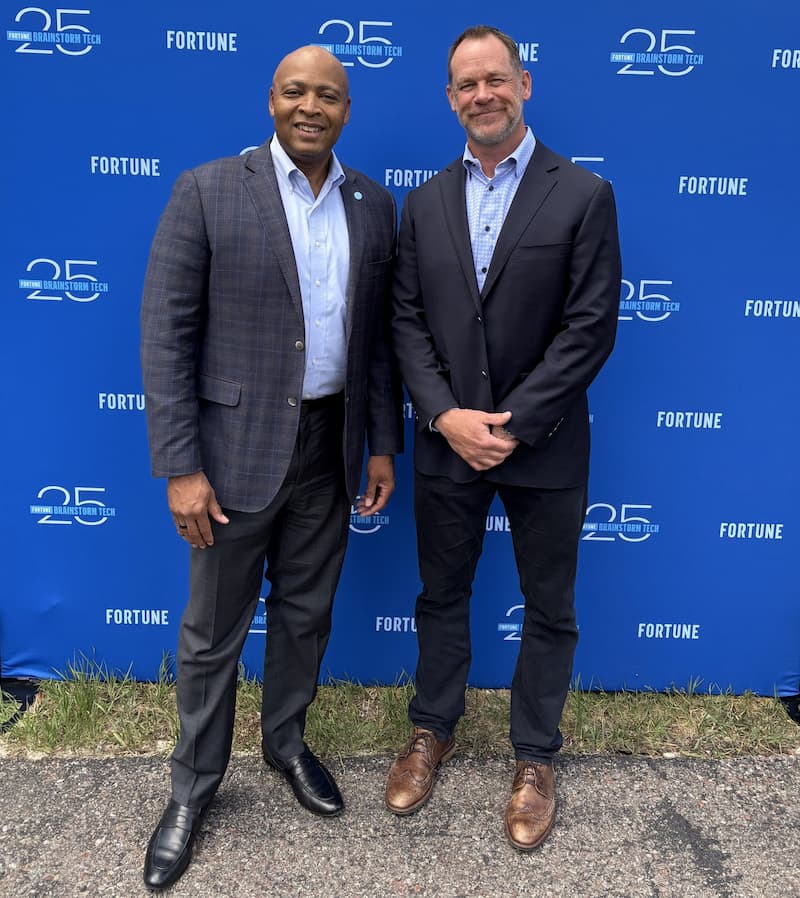
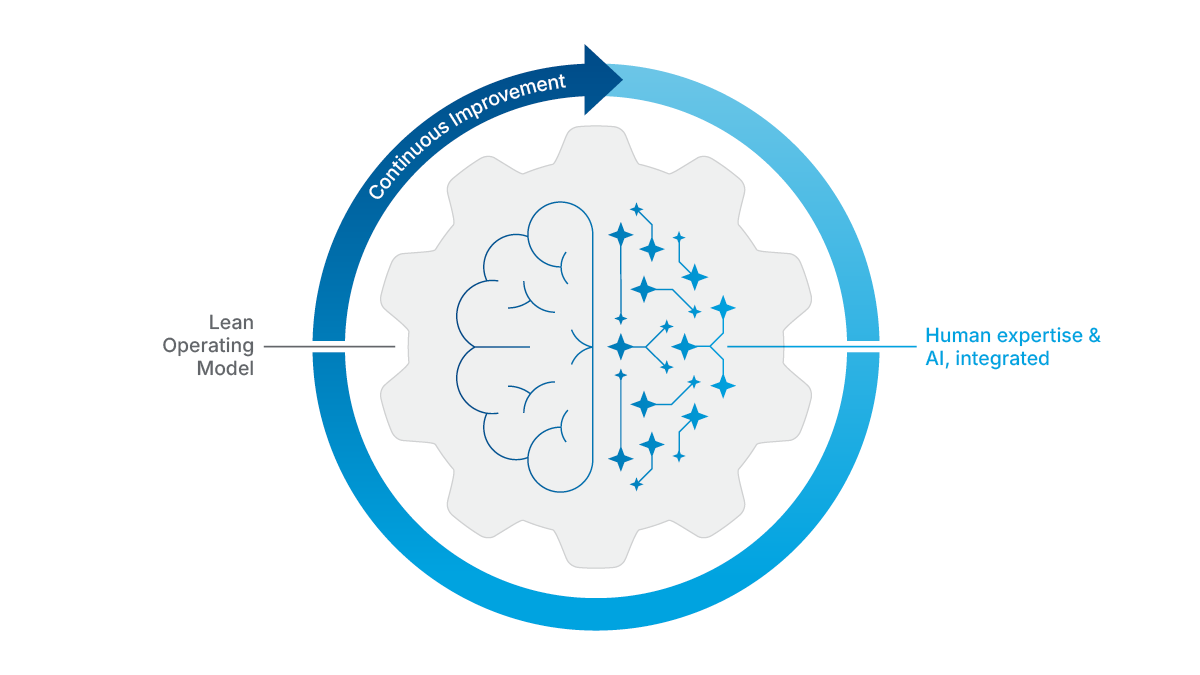
In a session moderated by Jason Del Rey, Founder and Author of The Aisle and co-chair of Fortune Brainstorm Tech, Bozeman spoke to C.H. Robinson as a true case study of what enterprise AI deployment looks like when the transformation is not rooted in technology alone. C.H. Robinson’s transformation is anchored in three pillars: a Lean operating model, excellent talent, and industry-leading AI technology. With this unique and disciplined approach, the company uses AI to solve real customer and employee challenges that once stood in the way of making supply chains work better. This advantage shows up in the results Bozeman shared, including the company’s 45% productivity gain since the end of 2022.
Among a curated group of industry leaders shaping AI’s future, Bozeman’s message was clear: you can buy software, but not the institutional knowledge, proprietary data, and operational muscle required to make AI work at scale. Especially in supply chains, one of the most complex live environments in the world.
Moving the world with Lean AI
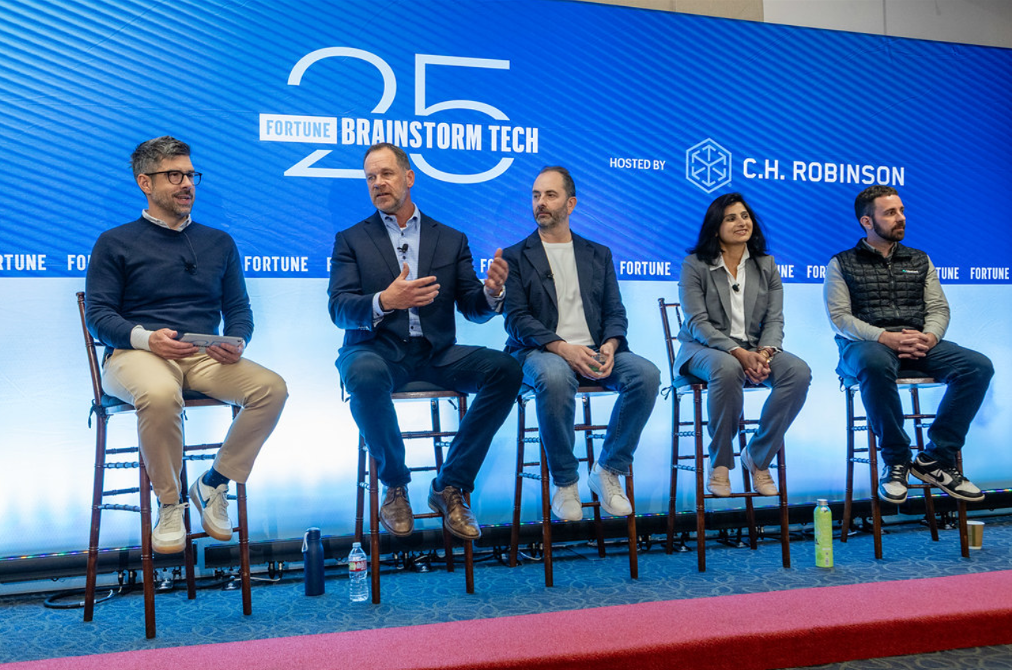
A roundtable discussion also moderated by Jason Del Rey brought together a cross-section of enterprise technology giants. C.H. Robinson CTO Mike Neill was joined by senior leaders from Gap and MinIO for a discussion that centered on a fundamental shift: how companies are using AI to close the gap between insight and action in complex, real-world operations.
For C.H. Robinson, that capability is rooted in how its AI systems are both developed and implemented. Rather than treating AI as a layer on top of existing workflows, Neill described an approach where intelligence is embedded directly into the company’s operating system itself.
This is made possible by the 450 in-house software engineers and data scientists building the company’s AI infrastructure, giving full control over how its systems are designed, trained, and deployed. At the core is a network of specialized AI agents—each trained for a specific role across the shipment lifecycle—designed to prioritize precision over improvisation. Operating within clearly defined guardrails and supported by human oversight where judgment is critical, the system is engineered to remain controlled, reliable, and grounded in operational reality.
Neill highlighted that what distinguishes this approach is not just execution, but what happens after. The company’s latest innovation is AI technology that operates a global supply chain and continually assesses and improves it. In a closed loop, intelligence captured on every decision and outcome is fed back into the system, continuously refining how it performs. The system goes beyond surfacing insights and applies them in real time—anticipating service issues, recommending optimizations, and improving results while the supply chain is in motion. With AI orchestrating their supply chain, customers can focus on strategic priorities and growing their business.
Defining the future of AI
While companies remain at different stages of their AI journeys, Fortune Brainstorm Tech made one distinct point: the future of AI will be defined by companies that can reliably execute in the real world and turn intelligence into consistent actioning and sustained ROI. C.H. Robinson’s presence—and leadership in the conversation—reflected the company’s strategic transformation over the last several years. Evolving from AI experimentation to an embedded Lean AI system that is driving continuous improvement and smarter, faster, better supply chains.

 Exklusive Einblicke